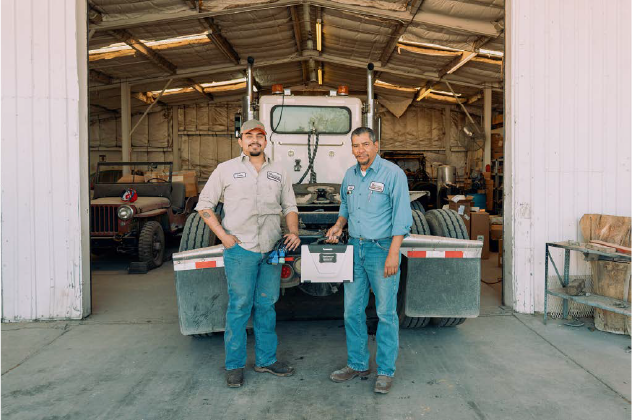
By Juan Alvarez Maintenance Manager
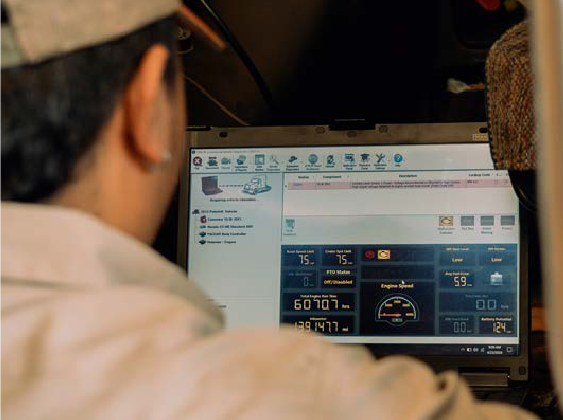
At the Western Precast maintenance shop, we are currently working with our newest acquisition. This new tool helps us perform repairs more quickly and efficiently. The scanner allows us to locate the reason the trucks DPF, Diesel Particulate Filter, an exhaust emission control device that captures and stores soot to reduce diesel vehicle exhaust pollution, is not functioning properly. This allows us to resolve the problem and force a regen in order to clear the fault code. This tool helps with a vast majority of all electrical/computer problems. We don’t have to search through a variety of different sensors that may present a conflicting code. We are able to get a detailed code and focus on the actual problem.
Maintenance Focuses on Efficiency, Reliability, and Prevention.
Behind every truck, forklift, and piece of equipment in the yard, there’s a constant effort to keep operations running smoothly. The maintenance team plays a critical role in that process—working daily to improve performance, reduce downtime, and extend the life of equipment.
Recently, the team has been focused on one key priority: minimizing oil loss across all equipment. From trucks to forklifts, small inefficiencies can quickly turn into larger issues if left unchecked. By staying ahead of these problems, maintenance helps reduce unnecessary wear and keeps equipment operating at a higher level.
One of the tools making a difference is the use of diagnostic scanners.
By connecting directly to the truck’s internal computer system, the team is able to monitor how equipment is being used in real time. The data reveals everything from shifting patterns to idle time and sudden stops—giving insight into how drivers are operating the vehicles. This allows the team to identify patterns, correct issues early, and improve overall efficiency.
In some cases, it also helps address recurring mechanical challenges.
Older trucks, for example, have required additional attention due to regeneration system issues. These systems depend heavily on proper operation, and when they’re not used correctly, buildup can occur—leading to repeated maintenance needs. By identifying the root cause, the team is able to reduce long-term strain on the equipment.
Not every issue can be resolved in-house, but the team makes that call carefully.
Each repair is approached with multiple attempts before escalating. If a problem goes beyond internal capability—or requires manufacturer-level diagnostics —the equipment is sent out. Otherwise, the goal is to handle as much as possible internally, saving both time and cost.
The team is also focused on improvements that impact performance.
A recent example involved addressing vibration issues in one of the trucks. After testing different solutions, the team transitioned to a new tire brand, which resolved the issue and improved overall driving comfort. Adjustments like these may seem small, but they have a direct impact on how equipment performs day to day.
Alongside repairs and upgrades, preventative maintenance remains a constant.
Every truck is brought into the shop on a fixed schedule—regardless of mileage or hours. During each cycle, the team completes a full inspection, including fluids, brakes, tires, and overall system performance. This approach ensures that issues are caught early and equipment remains reliable in the field.
Much of the work, however, goes unseen.
When equipment is used improperly or not handled with care, it creates additional strain—and more work behind the scenes. While issues may appear suddenly in the field, many can be traced back to how equipment is operated day to day. That’s why maintenance is more than just repairs.
It’s about supporting operations by ensuring every piece of equipment is safe, reliable, and ready to perform. From daily diagnostics to long-term improvements, the team’s work plays a direct role in keeping projects moving and standards high across the yard.